

The Grad Dress Guide: Length, Fabric & Fit for Every Gown Color
Graduation day is a moment you will remember long after the ceremony ends. From walking across the stage in your cap and gown to taking photos with family and celebrating with friends afterward, every detail becomes part of this milestone. The dress you choose underneath your graduation robe is more than an outfit — it becomes part of the memories captured on one of the most important days of your life.
Finding the right grad dress is not simply about choosing a beautiful design. Your outfit needs to work with your cap and gown, feel comfortable through a long ceremony, look polished in photos, and transition naturally into your celebration afterward. Whether you're graduating high school or walking at your college convocation, the best choice depends on your venue, weather, gown color, and personal style.
This guide walks through length, silhouette, color, fabric, and fit so you feel confident from the stage to the celebration.
What to Consider Before Choosing a Grad Dress
A graduation gown changes how you should think about your outfit. It may cover most of your dress, but the neckline, shoulders, and overall shape still show in photos — and once the gown comes off after the ceremony, your dress becomes the main event.
|
Concern |
What to Look For |
|
A long ceremony |
Lightweight fabrics and silhouettes that stay comfortable through a full program of speeches and names being called |
|
Walking on stage or stairs |
A hem and fit that let you move naturally, without careful small steps |
|
Graduation photos |
Clean necklines and colors that read well against your gown and stole |
|
Wearing a robe on top |
Avoid heavy volume, large bows, or 3D embellishments that create bulk under fabric |
If you're graduating from a college or university, check your faculty's convocation guidelines too — many programs require visible cords, stoles, or hoods, and a simpler dress color underneath usually lets those details stand out rather than compete with a busy print.
Length and Neckline: What Works Under a Gown
|
Length |
Best For |
Watch For |
|
Short |
Warm ceremonies, easy movement, younger graduates |
Choose refined fabric and details so it still feels formal |
|
Midi |
The most versatile ceremony-to-celebration option |
Check the hem doesn't peek unevenly below a shorter robe |
|
Long |
Formal, dramatic post-ceremony photos |
Test walking, sitting, and stairs in it before the day |
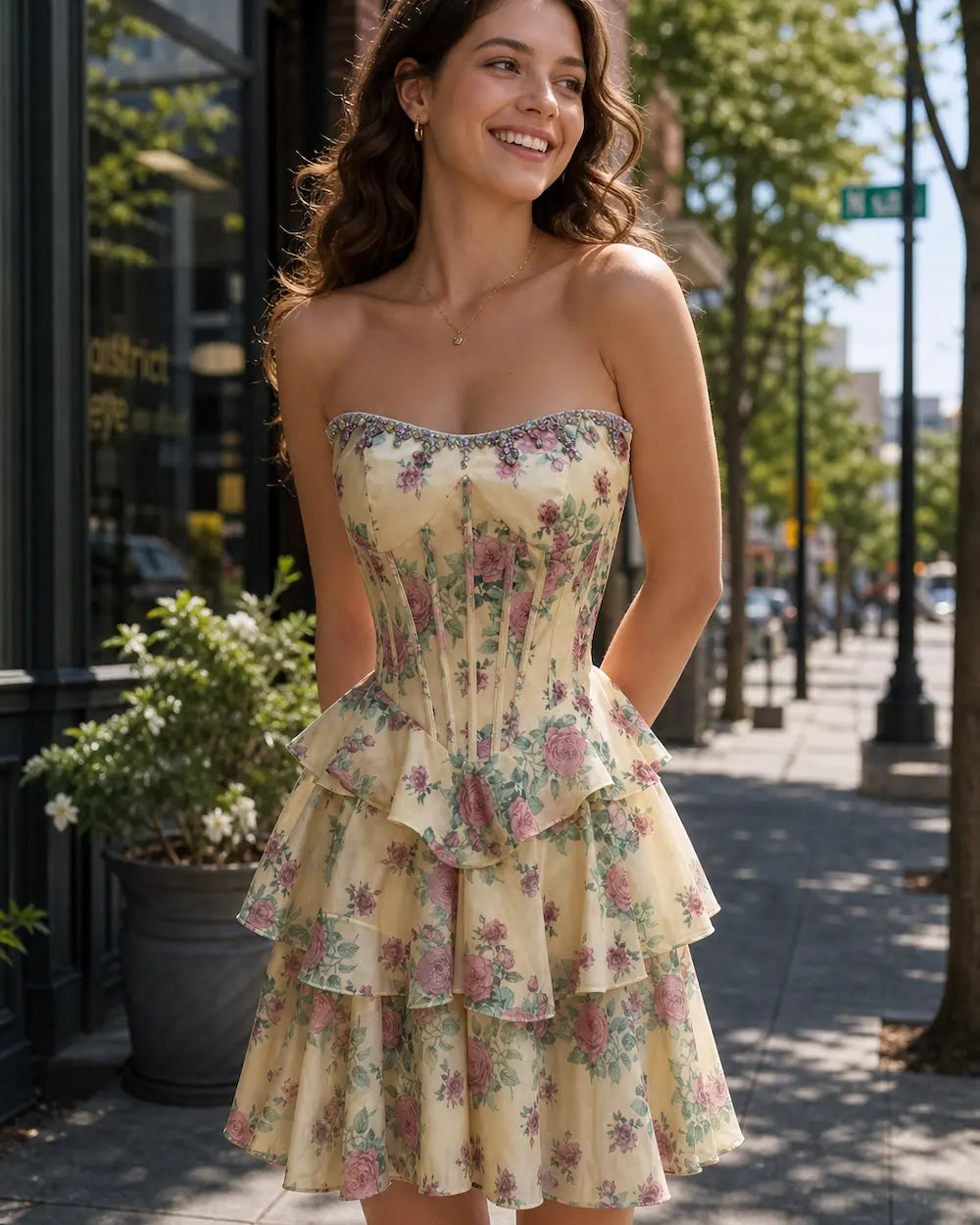
mini


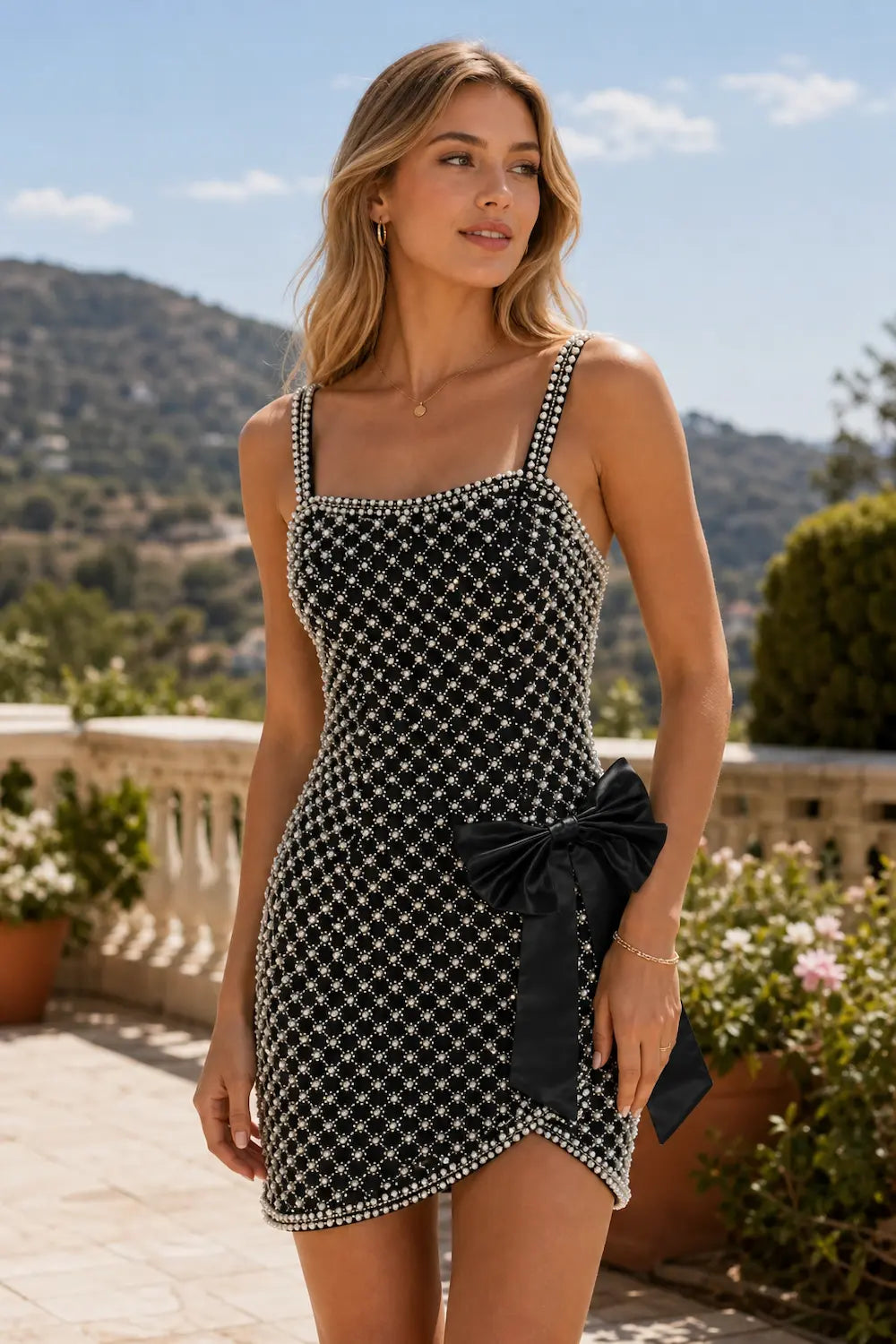
Midi and short styles are the most common choices because they offer freedom of movement without sacrificing polish — a practical edge if your convocation includes an outdoor procession or a cooler spring ceremony where you'll want layering options underneath a lightweight robe.
The neckline is one of the only details visible during the ceremony itself. Clean, structured shapes — a simple V-neck, square neck, or fitted straps — photograph well without adding bulk under the gown's collar. Skip oversized puff sleeves or dimensional florals near the neckline; they tend to press awkwardly against a robe's seam.
Choosing a Silhouette
|
Silhouette |
Best For |
|
Flattering on most body types, comfortable for sitting through a full ceremony |
|
|
Sheath / Column |
A sleek, modern look for graduates who want minimal volume under the robe |
|
Fit-and-Flare |
Defined waist with room to move |
|
A statement look for after the gown comes off — confirm it still allows easy walking |
A-line remains the most practical everyday choice; sheath and column styles work particularly well for university convocations, where a leaner shape sits smoothly under academic gowns that are often more fitted through the shoulders than a typical high school robe.
Matching Your Dress to Your Gown
|
Gown Color |
Dress Colors That Work |
|
White, champagne, blush, jewel tones |
|
|
Navy |
White, sage green, soft neutrals |
|
White or light |
Soft pastels or considered neutrals — avoid stark white-on-white under bright lighting |
|
Bright school color |
Neutral or muted shades to keep the overall look balanced |
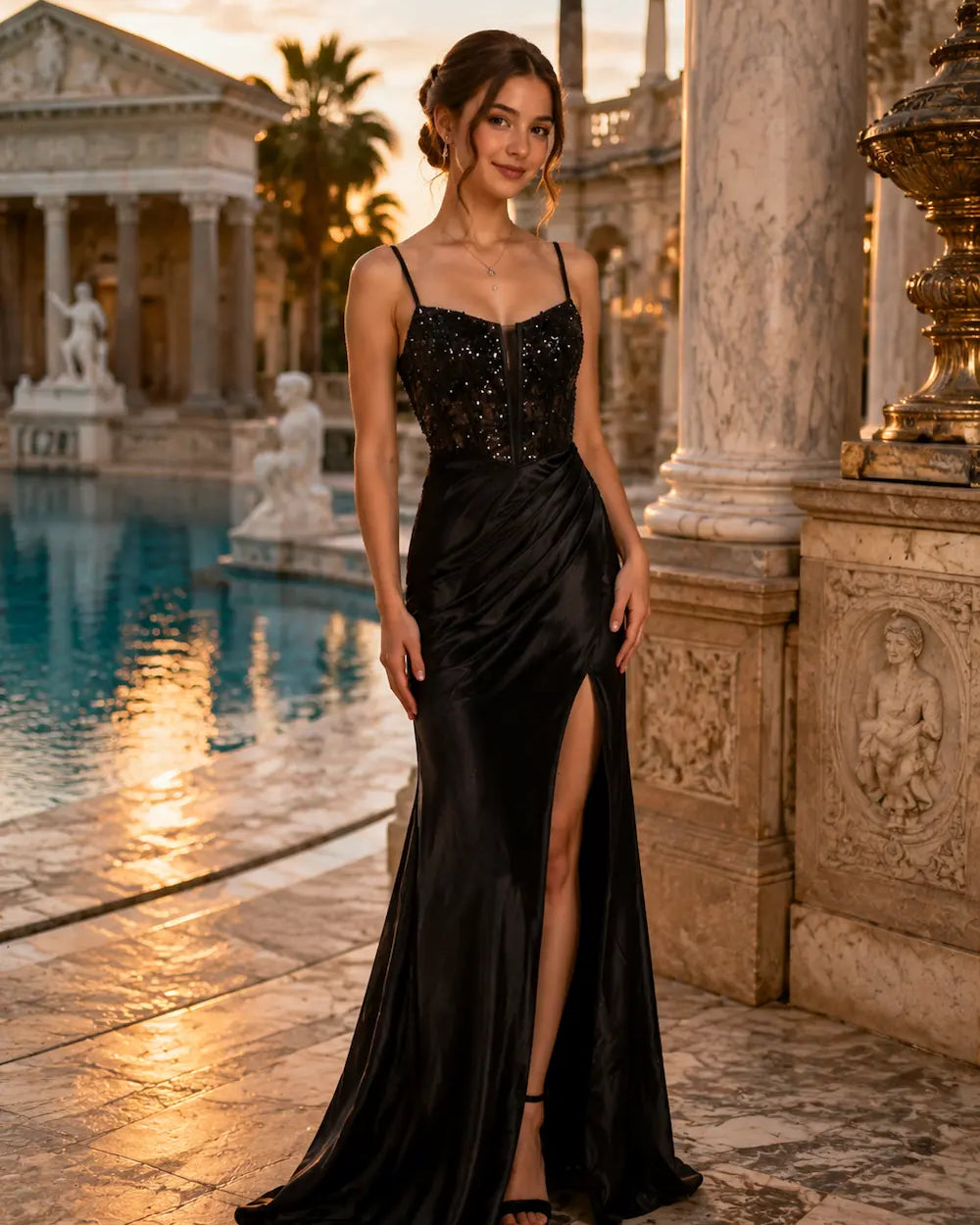
White remains the most timeless choice for its clean, photo-ready look. Black is a close second for graduates who want something more sophisticated — pair it with simple jewellery so it doesn't read as too severe next to a colorful stole or cords.
Fabric for All-Day Comfort
|
Fabric |
Why It Works |
|
Chiffon |
Lightweight, breathable for long ceremonies |
|
Crepe |
Structured drape that photographs cleanly |
|
Satin |
Elevated shine for after-ceremony photos |
|
Feminine texture that still reads formal |
For an outdoor or unpredictable-weather ceremony, chiffon or crepe are the safer picks — both move easily and don't wrinkle from hours of sitting.
A quick note on accessories: keep jewellery simple. A chunky necklace can catch on your gown's zipper or your cap's tassel, so a delicate pendant or small studs are the safer choice for a ceremony you'll be sitting and standing through repeatedly.
Getting the Fit Right
Compare your measurements to the size chart rather than your usual size label — fit varies most through the bust and waist for structured styles, and through the hip for mermaid or fitted silhouettes. If you're between sizes, size up for a fitted bodice rather than a flowing skirt, since alterations are easier on a looser seam than a tight one.
Before You Order: Final Checklist
· Confirm your school or faculty's dress code, including any cord, stole, or hood requirements
· Try the dress with your cap and gown if you can, to check for bulk or an uneven hem
· Test sitting, walking, and stairs — not just standing in front of a mirror
· Order with enough lead time for sizing checks; most made-to-order pieces ship in 5–7 business days before any alterations
Frequently Asked Questions
What should I wear under a graduation gown?
A comfortable dress that fits smoothly under your robe — lightweight midi or short styles are the most popular because they allow movement and still photograph well.
What length dress is best for graduation?
Midi and short styles offer the best balance of comfort and polish. Longer dresses work well if your ceremony is entirely indoors and seated.
Are short graduation dresses appropriate?
Yes — they're one of the most common choices for exactly this occasion, especially for graduates who want to move easily across a stage.
Is a graduation dress different for college versus high school?
The occasion is similar, but college convocations often involve visible cords, stoles, or hoods, and academic gowns tend to fit closer through the shoulders. A simpler dress color and a leaner silhouette — sheath, column, or fitted A-line — usually pair better with those extra layers than a fuller, more voluminous style.
What shoes work best with a graduation dress?
Block heels or wedges are the safest choice — they add height for photos without sinking into grass or catching on stairs the way a thin heel can. Break them in before the ceremony so a full day of standing and walking stays comfortable.
Are slits allowed on a graduation dress?
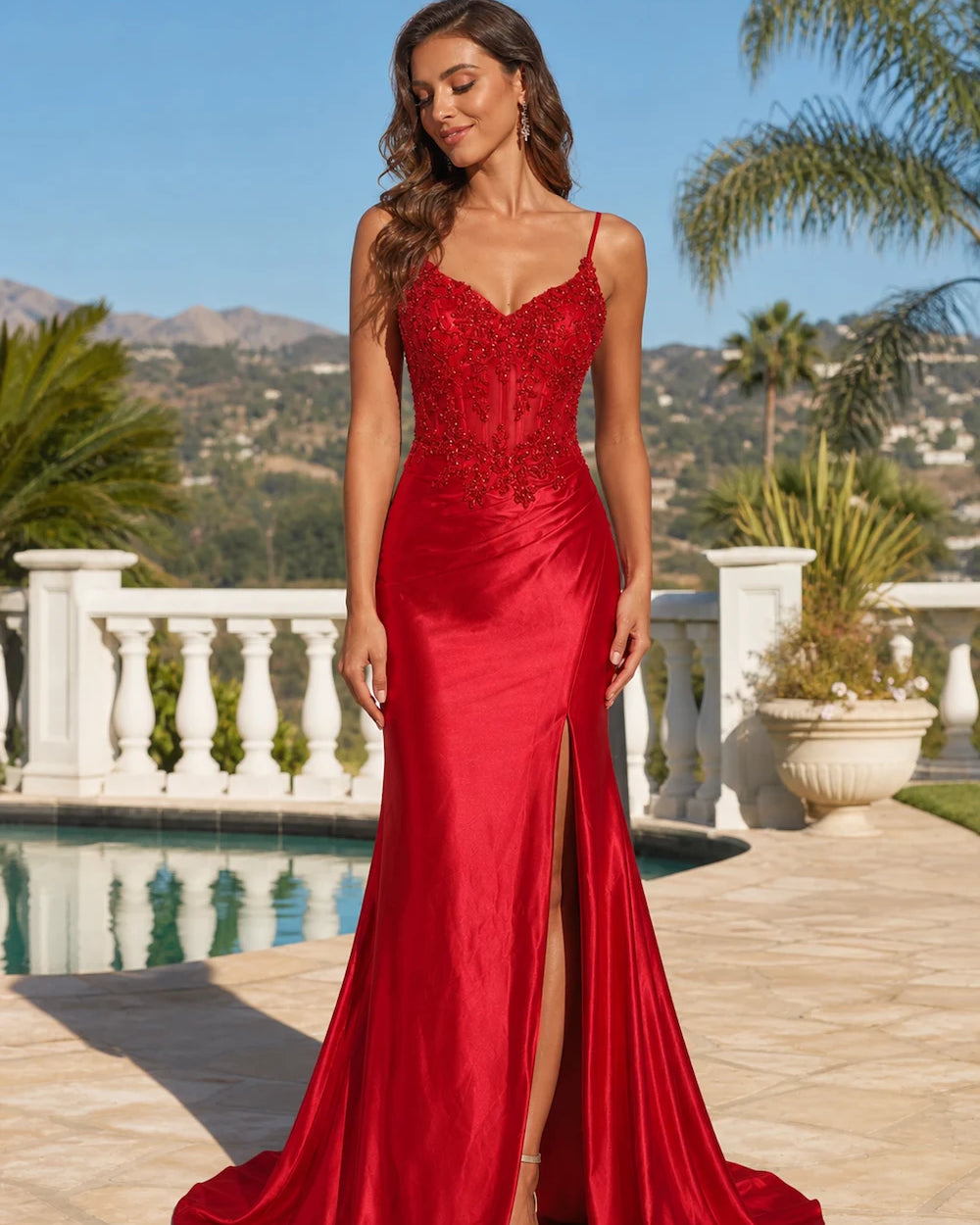
Most ceremonies are fine with a modest slit, but very high slits can look out of place once the gown comes off for photos. A knee-length or below-the-knee slit is the safer choice if your school doesn't specify a rule.
Why do graduates traditionally wear white, and can I wear another color?
White became traditional because it photographs cleanly against most gown colors, but it isn't a strict rule at most schools — pastels, black, and jewel tones are all common as long as they don't clash with a brightly colored gown or stole.
How early should I order my grad dress?
As soon as your ceremony date is confirmed — this leaves time for sizing checks and any last-minute adjustments before the day.
What's a reasonable budget for a graduation dress?
Most shoppers find well-made options in the $80–$150 range, with made-to-order or extended-size styles sometimes running a little higher.